Sunday, November 7, 2010

Inefficiencies


Location: Near the corner of Ellis and  Rodney Street, about two houses away on Ellis, in Waterloo

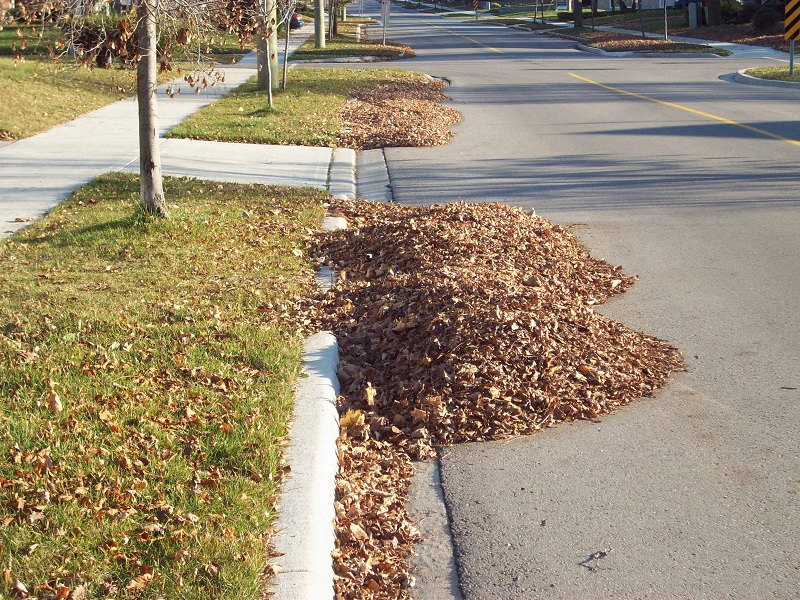
Description: A road on the right complimented by a boulevard and sidewalk on the left. The road has piles of leaves on it that have been raked there for pickup.


Story: We all want things to work perfectly, or at least better than how they currently do. It's very easy to spot problems in your life and think of simple ways they could be improved. If that pothole was just filled in, the sidewalk made level, or your neighbour would pick up after his dog, then everything would be ideal. Extending this mentality to your own life is more productive, as saying that your life would be better if you cleaned up more often can lead you to do just that.

It's easy to get carried away and get upset if things aren't exactly how you want them, right now. People get discouraged when they try something new and it doesn't turn out like a masterpiece. It's especially true in businesses where new products are tried and then quickly abandoned. It can be hard to continue when there seem to be so many problems.

There is a long-term advantage to trying something new though. If you went about growing your own food, you could save money and spend more time at home and outside. It might make more sense to let the professionals (farmers) do the work because they can do it so well, but that's thinking short-term. Yes, you won't be doing everything as quickly or as cheaply, and perhaps you never will, but that doesn't mean it's a bad investment. Maybe your vegetables cost you more than if you bought them from the store, but you might save enough on gas to make it worthwhile.

When you're changing from one situation to another, you have to accept the inefficiencies that occur. Not everything will work perfectly the first time; that's called learning. So long as you're learning though, you're bettering yourself and reducing the inefficiencies. So what if you can't clean your house as fast or well as a professional service? By doing it yourself it's probably cheaper and it can give you a sense of accomplishment when it's done.

Ideally, everyone would compost their own leaves and then use it as mulch for their gardens, but not everyone is there yet. Perhaps some people's time is better spent working at their own job, and so it makes more sense to have the city pick up the leaves. This allows mulch to be produced on a large scale and then individuals can buy the end product without any fuss. On the whole it's better if everyone was able to do it themselves, but doing it this way still gets the job done.

Don't get caught up with doing it right the first time, just get it done without any huge problems. Afterwards you can find your mistakes and try again. Each time you repeat the cycle you'll get better and the work will be more streamlined. So don't fret; it may not be perfect, but it works.

Saturday, November 6, 2010

Commitment


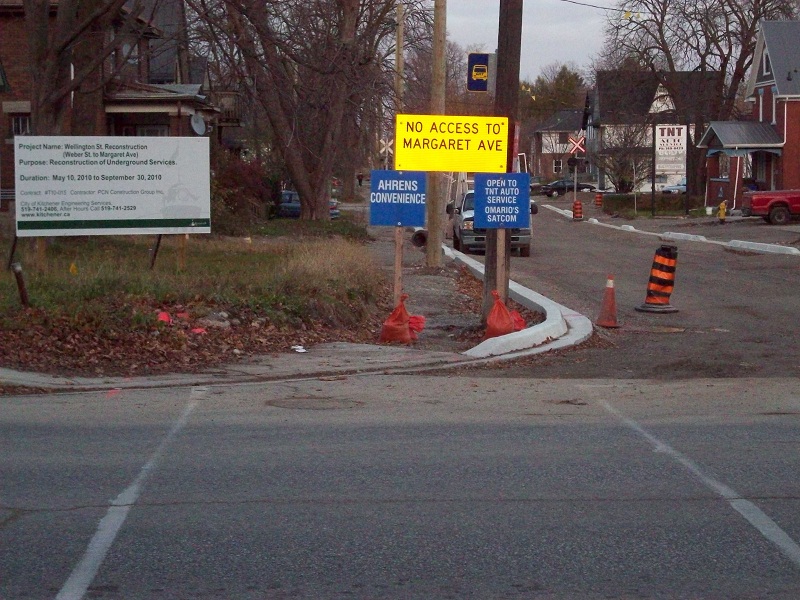
Location: The intersection of Weber and Wellington in Kitchener

Description: A road under construction with various signs nearby, the most prominent saying "No Access to Margaret Ave." On the left most sign it reads "Duration: May 10, 2010 to September 30, 2010"; it's November 6th today and work has halted leaving no sidewalks and the road unpaved.

Story: Commitment is all about saying something and then doing it. It can be a hard thing to do especially if the commitment is long term; the more time that's involved, the more a situation can change and become difficult to predict.

For some, commitment is a scary thing. They don't know if they can do it and so they say they can't, or preface their attempt with "I don't know if this will work, but I'll try." It's especially terrifying if it's long term, because if they don't know themselves now, how can they expect to know what they'll do in the future?

To commit to something and follow through you need three basic things: to know yourself, to know what's required of you, and to know that you'll continue to do it after the initial feelings (usually excitement) have worn off.

The first might be the hardest. To know who you are is a difficult thing, and many people don't invest time to learn about who they are. Will you fight or flee? Do you love to sing karaoke, or just like getting attention? Is it really important to you that people remember your birthday? Luckily you don't need to know everything about yourself to commit to something, only your feelings and abilities related to the given task.

Knowing what the task involves is fairly easy. Just ask the other person or learn about the task more, so you know what to expect. Doing research here is critical as miscommunication or ignorance could mean problems in the future. It's really easy though and you can usually take some time to learn more. Fortunately, a lot of things you'll already know immediately from experience, like how long it takes you to get ready for a date. So long as you keep your head about you, it's straightforward.

The last step is the most variable. Some commitments are quick, such as saying you'll do the laundry today, so you don't have to worry about the situation drastically changing. However there are longer commitments like marriage or tattoos that require a lot more thought. If you plant a garden in the spring, you have to commit to weeding, watering, and nurturing it throughout the season if you want a good harvest in the fall. Are you willing to give some time every week to help your plants grow? Are you determined to see that seed become a prize-winning pumpkin?

Take a few minutes today and try to count to one hundred. You've probably already done it once in your life, and it shouldn't take more than two minutes. Now count to one thousand. It might take you a half hour, maybe a full hour, but stick with it. It's not a big commitment, but it's a start. Doing little tests like these will help you understand more about who you are and how committed you are to your goals.

(As a bonus, if you counted at one number per second nonstop, here's how long it would take you to count to...
10 - 10 seconds
100 - Under two minutes, or less time than it took you to read this blog post
1,000 - 17 minutes
10,000 - Under three hours, or six minutes a day for a month
100,000 - One day and four hours
1,000,000 - Just over 11.5 days, or about 45 minutes a day for a year
Let us know if anyone gets to ten thousand or more! Good luck!)

Friday, November 5, 2010

Connections


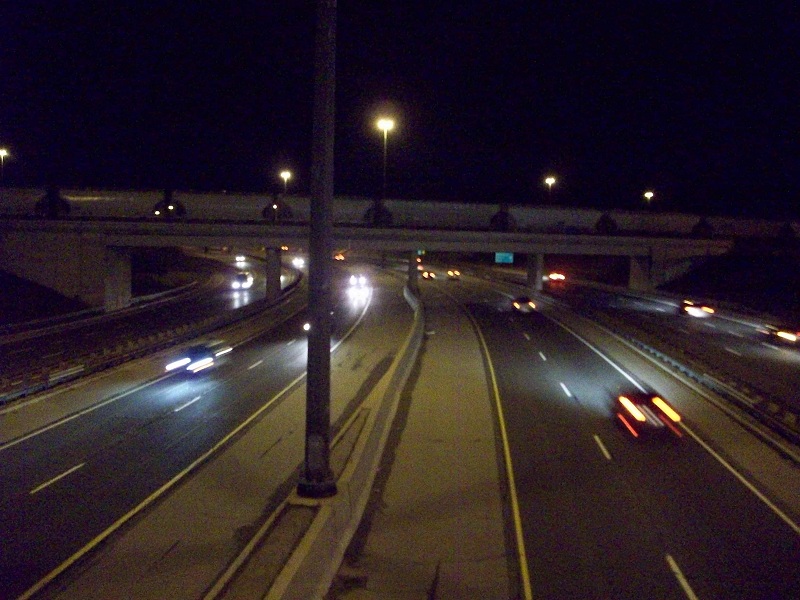
Location: The overpass on Victoria Street, near Bruce Street

Description: A two lane highway with collector lanes and a train on an overpass above it.

Story: We get tea from China, games from Japan, cars from Germany, and the list goes on. Of course, this was happening centuries ago, primarily with trade between Europe, China, and India. But now we're pushing further than before, bringing the best from all around the world to your front door.

This is great for consumers, because in theory they'll get the best quality item for the lowest price, especially with bigger ships and aircraft being creating, cutting down on shipping costs. But this means the larger companies can undercut the local shops, and outsourcing becomes more common; customer service becomes more of a problem, and consumers become less human while corporations become faceless.

Inefficiencies creep in when you have to report to your manager's manager about a local problem. No longer can you fix a problem yourself, but instead it needs to be documented and filed so there's a record. The company suffers as a result and gets bloated.

The consumer pays in the end with either too many options or too few. Where they could easily discern the best, they now need to research and compare features as well as find out what those features do. And marketing starts to work against you, not informing you about the produce but selling you an experience, a dream, or just destroying the competition.

Everything changes quickly too. With more competition there's a drive to build things better and get them out quicker. Sometimes the improvements are small, with only a handful of changes, but there's now a desire to have the latest and greatest. It's a problem for physical objects because you need to buy a completely new product, but for software it's perfect as the user only needs to download a patch and they're ready to go.

Luckily we're going with more and more software. We're moving away from products and trying to do more with less. Instead of ten different electronic devices, one to play poker, another to track your appointments, and a third to use as a pager, we're merging them into one smartphone.

Consumers want Swiss Army Knives, not toolboxes. Employees want the power to do what needs to be done, not bureaucracy. Companies need to stay lean and work as if they were many, small entities, not one behemoth. Each and every one of us is a person; it's time that companies started working with us on that level.

Thursday, November 4, 2010

LMNOE


Location: Behind Joseph & Company in a back alley (full location information can be found via the Google Maps link at the end of the post)

Description: A sheet metal fence with a brown piece in the middle, and branches from a bush coming out from the gap between the two pieces.

Story: I'm sure you've heard that "If life gives you lemons, make lemonade." That's only the start though. Once you've made the lemonade you should drink it and dream of star ships or dance routines, things that never were and sights unseen. Plan for tomorrow what there isn't today, and never let "reality" stand in your way.

Take those lemons, some metal, and build a battery, to power a machine that dispenses flattery. In a temperate climate you could plant your lemon seeds; have the farm you create provide all our citrus needs. Start a flavour revolution with a dash of lime; add some lemon zest to compliment your chicken with thyme

To get a new dance move,
Watch the lemon groove,
With a wobble,
And a bobble,
It'll help you improve.

Change lemon into melon via convolution;
Start contemplating the theory of evolution.
Spare vinegar, make a citric substitution,
And give your volcano a lemon execution.

You could combat scurvy and gets lots of C,
if you just had some lemon in your cup of tea.
That's as far as I can stretch this analogy,
so let's slowly make our way back to reality.

It's not the place you start or what you have there, it's that you look ahead and keep asking: "Where? Where will this take me, what's in store?" and that you always keep on questing for more. Not more in the sense of objects and things, but more in smiles, the happiness life brings.

And that's what this plant did, it kept on growing, knowing that it would eventually break through. It didn't stop, wither and die, but grew, grew for the sky. You'll see challenges, obstacles, issues to be sure, but they're not that you know, they're part of the cure. Just sidestep, capture, and use them for good, they're already there; you know that you could.

If a train's coming at you, you don't try to stop it with brute strength. It's wiser to step out of the way, and maybe buy a ticket for the next one coming through. Any problem can be made into a solution; that's what algebra was all about. All it takes is a little rearranging, and maybe exchanging an E for a P to make things fit eerfectly.

Wednesday, November 3, 2010

Direction


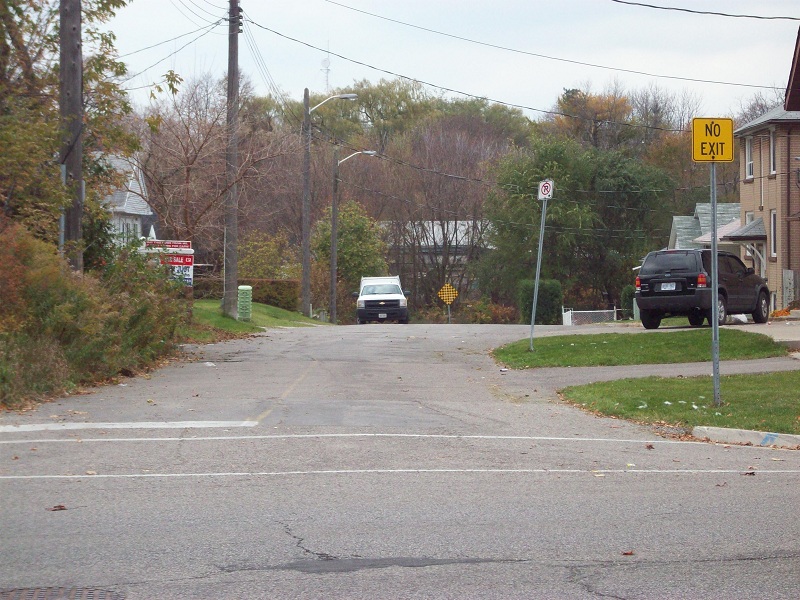
Location: The corner of Blucher and Weber, looking towards the end of Blucher St.

Description: Looking across the intersection, there is a "No Exit" sign on the right, various vehicles and buildings on both sides of the road, a "For Sale" sign on the left, and in the middle is Blucher St. sloping downwards with another vehicle on it.

Story: We've all got plans, right? Where are you headed? What are your dreams?

It's not a trivial question, nor one found only in fairy tales. Each day we make decisions that lead us forward to... something. Something we choose. You can wake up and lay in bed all day, you could write a story, or learn how to play a musical instrument. You choose how you greet people, if you react with shock or awe when your friend eats twelve hot dogs, and if you try to emulate them the next day. So much is your choosing.

I'm not trying to say anything grandiose here, like you can shape the world to your will. All I'm saying is you can make a change, today, to better something in your life. Maybe you could vacuum a room in your house, walk an extra block, smile a little more, or just think to yourself: "I am a wonderful person." It's not hard, it's not big, and it's not impossible to fit into your day. It's one thing. Do it.

If you came to a dead end, what would you do? There are so many options, like looking at a map if you're lost, asking for directions, or simply turning around and trying another direction. Just keep going. It doesn't matter that you're on the wrong road now, so long as you turn around. You may not have a master plan yet, but so long as you know a dead end when you see it, you'll get by.

Tuesday, November 2, 2010

Amends


Location: Woodside National Historical Site, Kitchener

Description: In a grove of evergreens, with three rows before a fence separating the park from Hogg Fuel (you can see a building in the background, towards the left of the centre of the picture).

Story: People make mistakes. It's not because we want to do something wrong, but rather that we don't know everything about a situation when we act, or we overlook something we shouldn't. Humans, in general, try to do the best that they can, and sometimes it's the wrong thing.

Given this, we have to be willing to forgive those who wrong us, and accept that we too might do something wrong. What's most important is not being perfect, but in always correcting our mistakes. We may not be able to change the past, but we can take responsibility and change the present.

And that means listening. Say you're sorry, come up with a way to not do it again, and then ask what you can do to make things better. It's better to hear them say "I just need some time alone," than to do something for them and make another mistake.

Which brings us to today's picture. I can't say for certain, but I think this area was clear cut many years ago, only for someone to realize they didn't need this particular piece of land. So they donated it to Woodside National Historic Site and planned rows of evergreens to reforest the area. The trees are fully grown now and the business is still in operation, so the solution has worked. They may have made a mistake at first, but with time and a little effort, it's been corrected.

Monday, November 1, 2010

Treats


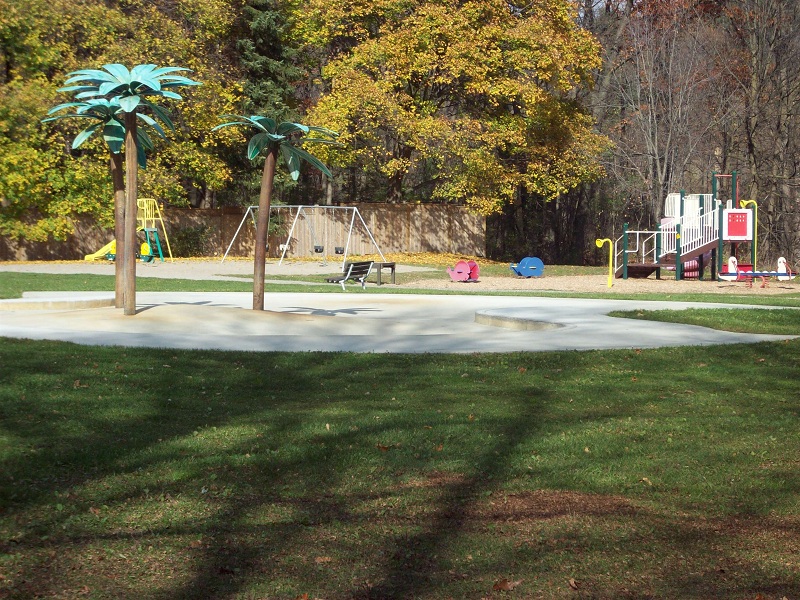
Location: Breithaupt Park, Kitchener-Waterloo border

Description: Grass in the foreground, a splash pad with three palm trees in the midground followed by a path and playground equipment in the background.

Story: Only 35 children came for candy last night.Granted the temperature was around the freezing point of water (I know I wouldn't have lasted long in just a tutu and leotard), but there's another factor. I've noticed that the numbers have dwindled from over one hundred five years ago down to about 40-50 last year. But why is this?

I think there's quite a few reasons, the main one being that since fewer children are going out, fewer houses are offering treats, causing children to have less incentive to go, which feeds back on itself. Further, having to go three or four houses for your next treat discourages children, so they don't go as far as before, resulting in fewer children attending any given house. Perhaps parents have a role in this decline as well, but whatever the cause it seems like a shame.

Many years ago, I remember planning a route with my friends and carrying pillow cases, which we would then loop back to one of our houses to drop off. We could go for hours with that strategy, covering a lot of ground and ending up with multiple loads of candy. It isn't hard to design a route like this either; at most you need to walk around your neighbourhood a little beforehand, or know how to read a map, so I'm surprised that kids today aren't doing it as much.

Maybe candy isn't as important as it used to be. Maybe that one night of freedom, where you could talk to strangers for hours, be out with your friends, and see really great costumes isn't as alluring as it once was. The recent form of trick or treating probably didn't start until 1930 or so, and 80 years later it may be on the decline.

Where have all the children gone? I can't completely say. But if you have an idea, let me know; it's been bugging me all day.